-
📘 Devlog
Godot Game - More On Level 3-1
Continuing level 3-1, plus adding some more elements to stop long falls. Continue reading →
-
📘 Devlog
Godot Game - More On Level 3-1
Continuing the build out of the new zone for level 3-1, plus implement a new variant of the balloon with mine entity. Continue reading →
-
📘 Devlog
Godot Game - The Back Third of Level 3-1
Redoing the back third of level 3-1 to be a closer match to the front third. Continue reading →
-
📘 Devlog
Blogging Tools - Podcast Clip Favourites
Finishing off the favourite podcast clips feature. Continue reading →
-
📘 Devlog
Blogging Tools - Podcast Clip Favourites
Working on saving podcast clips from Blogging Tools into a Hugo site, done in the “lab notes” running commentary approach. Continue reading →
-
Bit more on lifts in Godot today. Re-engineered how the whole thing works: now everything is driven by the stationary lift doors. Each door has a reference to a lift and a target door. This makes the lift carriage itself rather passive: it will continue to reparent the player as before, but it no longer needs to track activations or have animating doors of it’s own. The doors just tell it where and when to go.
This has got proper targeting working so that a lift can now move between a pair of doors. It also allows for the player to call for the lift when it’s not positioned at the doors already. There are a few more dependencies amongst the various entities, but I think it makes for a more robust system.
-
Small change to the thirst mechanic for my Godot project. Switched from discrete thirst levels to a single timer that will tick down if the player is thirsty. This allowed for a change to how I indicate this to the player, replacing text messages that’ll be displayed at each thirst level with a gauge that shows up on the HUD.
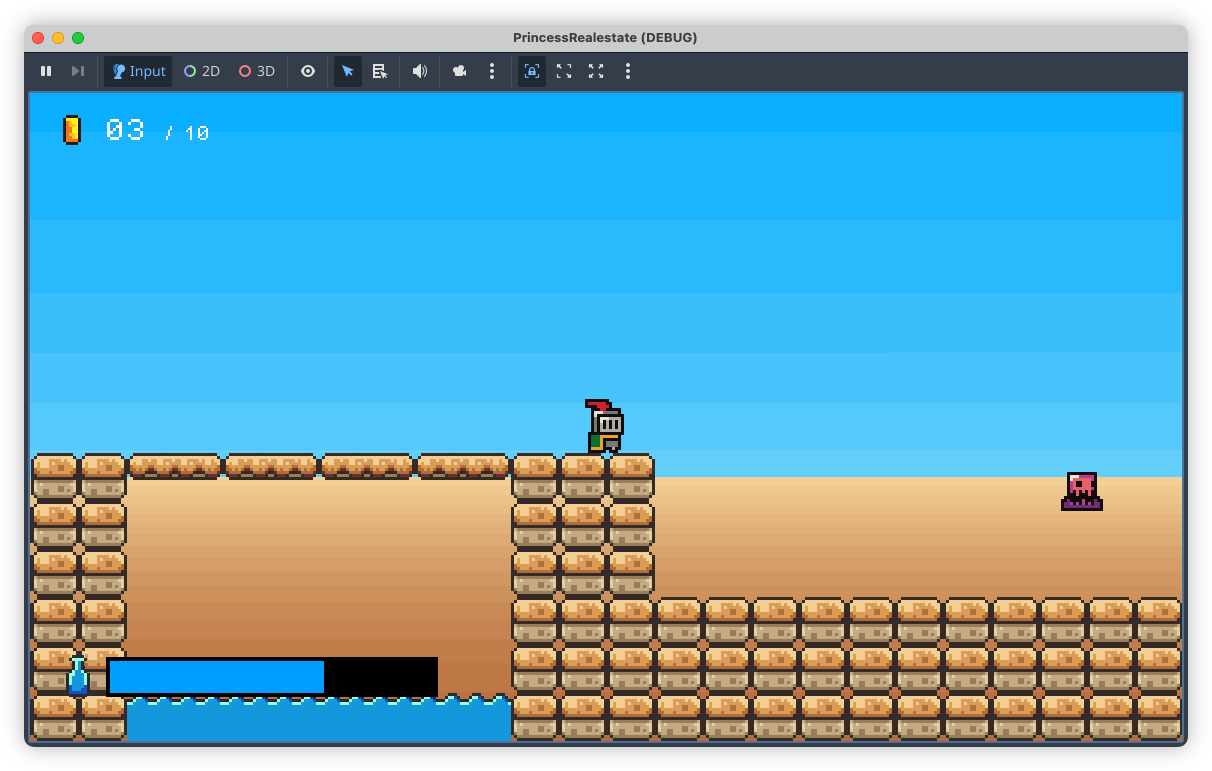
I thought that the messages would be enough, but after playing through with them, they turned out to be more of a hindrance. They didn’t communicate the player’s thirst level well enough: they show up for a few seconds, then disappear, leaving the player to wonder how much time they have. This information is now always present with the gauge. Plus, I think it gives more of a sense of urgency, in that a gauge that’s constantly ticking down will encourage the player to play a little faster in order to reach the next water bottle before they perish from thirst.
-
More on that Godot project today. Finally bit the bullet and started working on proper backdrops. I’ve leaving the artwork until later (i.e. I’m procrastinating), today was all about the mechanics, trying to get parallax scrolling working. Fortunately Godot has built-in nodes to make this easy, although I did have to upgrade Godot to 4.5.
This is my first cut, some simple colour banding to represent sky and sand in one of the desert levels:
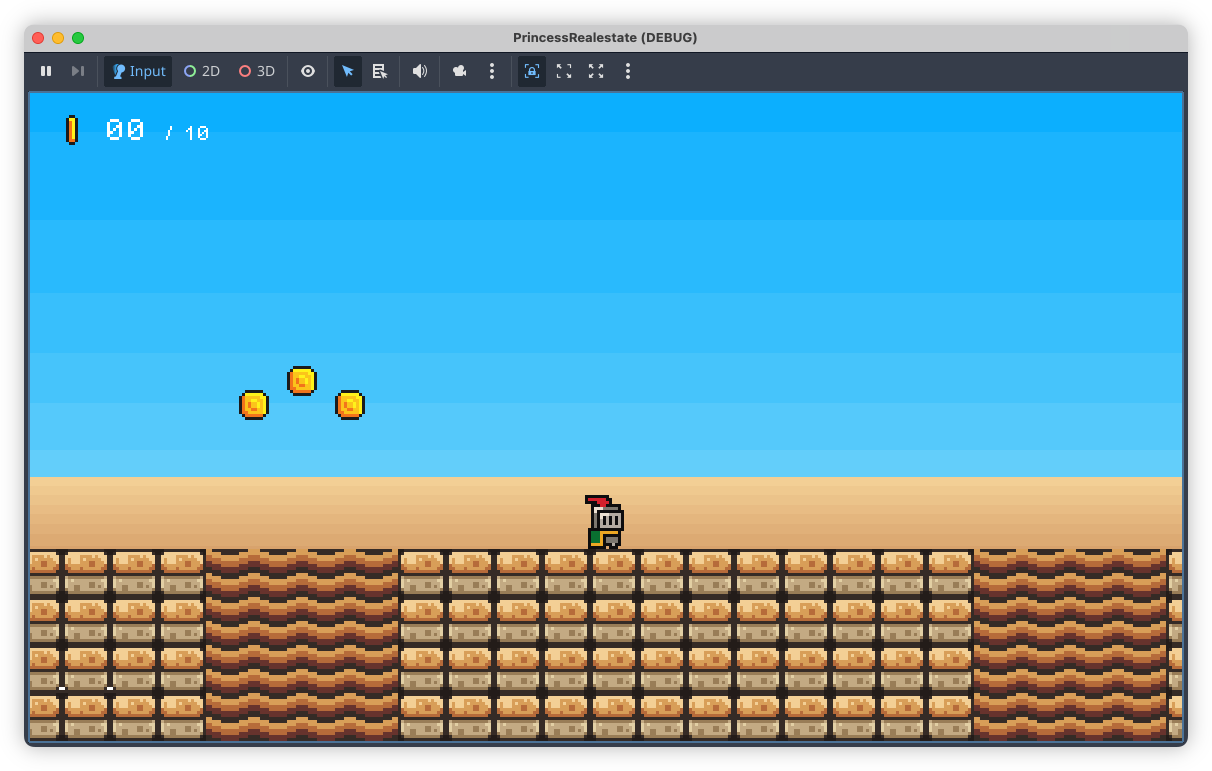
These two layers were added to the scene as Parallax2D nodes, each with a single Sprite child. Positioning the sprites was a little tricky. Godot suggests placing them at the origin, but what I didn’t understand was that the actual position of the sprite depends a lot on the scroll scale of the Parallax2D node. I added the sky layer without changing the scroll position and it took me a while before I discovered that it was appearing below the camera. Only after reducing the scroll scale to about 0.1 did it start showing up in the viewport (one nice thing about Godot 4.5 is that the “play scene” window includes debug options, allowing you to hijack the camera and move it around the scene).
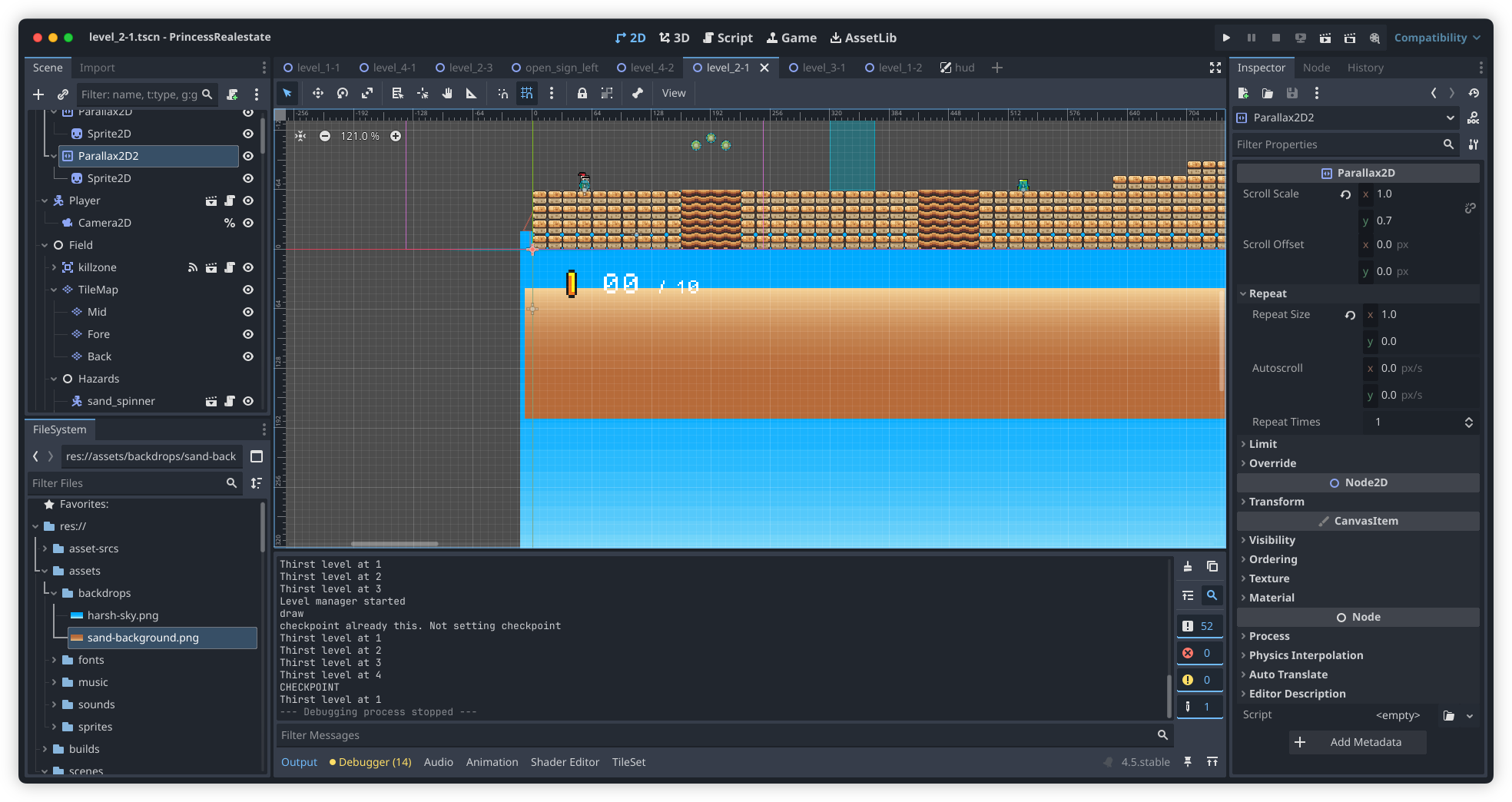
I will need to introduce some detail in the backdrop layers soon. The bands are too simple and may induce some vertigo when the player is ascending to high platforms. Plus, it just looks boring. Not that they’re meant to be eye-catching but something a little more interesting would be nice.
-
Small DevLog update today. Continuing to work on that Godot game. I got the bulk of the mechanics of level 2-1 built (it still needs dressing up), and I spent this evening mainly just play-testing it, and tweaking it. I think I may need to get someone else to play-test it though, just to make sure it’s not too hard. It’s significantly long, coming in at 10,560 units horizontally, and given how many new mechanics are involved, I’m a little worried about the difficulty curve. But I am happy about the mix of elements I do have. It doesn’t feel boring, which was the concern I had. There are some timing challenges, and I the pacing across the level feels fine. But I really should convince someone else to try it out.
-
📘 Devlog
Trying OpenAI Codex to Produce Freelens Logo Creator
Using OpenAI Codex to make a logo generator tool to allow customisation for different clusters in Freelens. Continue reading →
-
Ah, MacOS’s locked-down nature strikes again! Was testing the CI/CD build for Dequoter and after downloading the artefact and attempting to open it, I got this warning message:
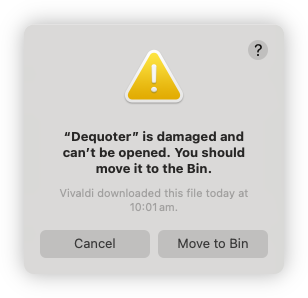
Turn’s out it was being quarantined by MacOS, and these instructions resolved the issue:
xattr -dr com.apple.quarantine '/Applications/Your Application.app'The binaries not notarised so I wasn’t expecting it to work out of the box. I was hoping that it would do that thing where the app will be listed in settings and I can allow it to launch from there, but I guess there’s something about where this file came from that was too much from MacOS. Ah well, I can live with this for the short term.
-
📘 Devlog
Dequoter — Something Different Today
A new project called Dequoter was started to unquote a JSON string and filter it, utilizing Go for backend functionality and HTML for the frontend. Continue reading →
-
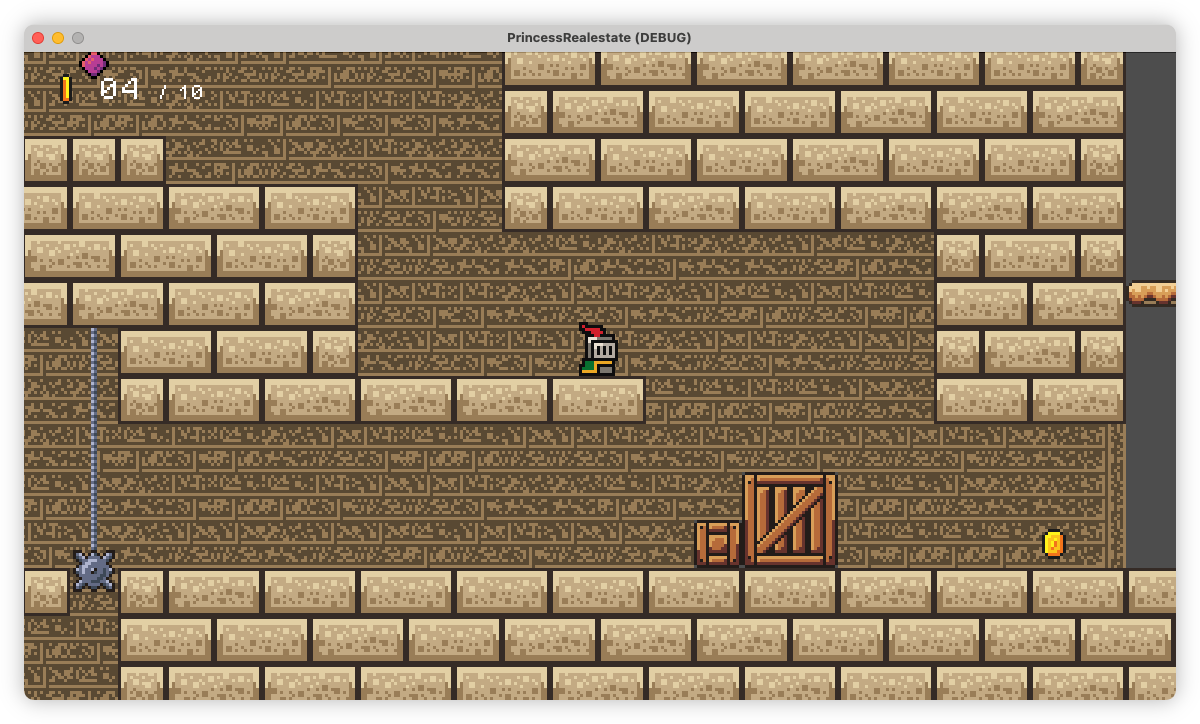
Starting to work on the background tiles. This is what I have so far. I hope it’s not too busy or distracting.
-
📘 Devlog
Godot Project — Bricks in Level 2-3 Laid
Just a quick update today. I’ve finished all the brickwork in level 2-3. And it didn’t go too badly. Made one significant mistake which would’ve involved a lot of rework, that I patched up with some single tiles: Top: the mistake. Bottom: the fix. Doing the rest of it was pretty dreary work. Godot does have some tools to make this easier, but there was no getting around the level of care needed to place the bricks correctly. Continue reading →
-
📘 Devlog
Shutting Down Nano Journal
With the move to Obsidian for my journalling needs, I shut down my bespoke journalling web-app. I deployed it on 26th August 2024, which makes it just over a year old. I did start using Obsidian on the 20th though, so it didn’t quite make it the entire year. Even so, not bad for something hand made and somewhat neglected. Most things I eventually abandon last way less than that. Continue reading →
-
📘 Devlog
Godot Project — Level 2-3 Update
-
📘 Devlog
UCL — Comparing UCL To Some Early Ideas
Comparing UCL to an idea for a hypothetical command language for a now-defunct CLI project, which aimed to combine shell-like REPL functionality with scripting capabilities. Continue reading →
-
📘 Devlog
Blogging Tools — All About Images
Some recent changes to Blogging Tools around images and image processing. Continue reading →
-
📘 Devlog
Godot Project — Level 4-2 And Level 2-3
Progress has been made on level 4-2, and early development on level 2-3, alongside new game elements. Continue reading →
-
📘 Devlog
Blogging Tools — Category Fixer
Adding an RSS feed parser and in-app notifications to build a feature to triage image posts that don’t have a category. Continue reading →
-
📘 Devlog
Godot Project — Some Feelings
Progress on the Godot game has been fulfilling yet tinged with doubt about its value and purpose. Continue reading →
-
📘 Devlog
UCL — More About The Set Operator
I made a decision around the set operator in UCL this morning. When I added the set operator, I made it such that when setting variables, you had to include the leading dollar sign: $a = 123 The reason for this was that the set operator was also to be used for setting pseudo-variables, which had a different prefix character. @ans = "this" I needed the user to include the @ prefix to distinguish the two, and since one variable type required a prefix, it made sense to require it for the other. Continue reading →
-
That Which Didn't Make the Cut: a Hugo CMS
You’ve probably noticed1 that I’ve stopped posting links to Open Bookmarks, and have started posting them here again. The main reason for this is that I’ve abandoned work on the CMS I was working on that powered that bookmarking site. Yes, yes, I know: another one. Open Bookmarks was basically a static Hugo site, hosted on Netlify. But being someone that wanted to make it easy for me to post new links without having to do a Git checkout, or fiddle around YAML front-matter, I thought of building a simple web-service for this. Continue reading →
-
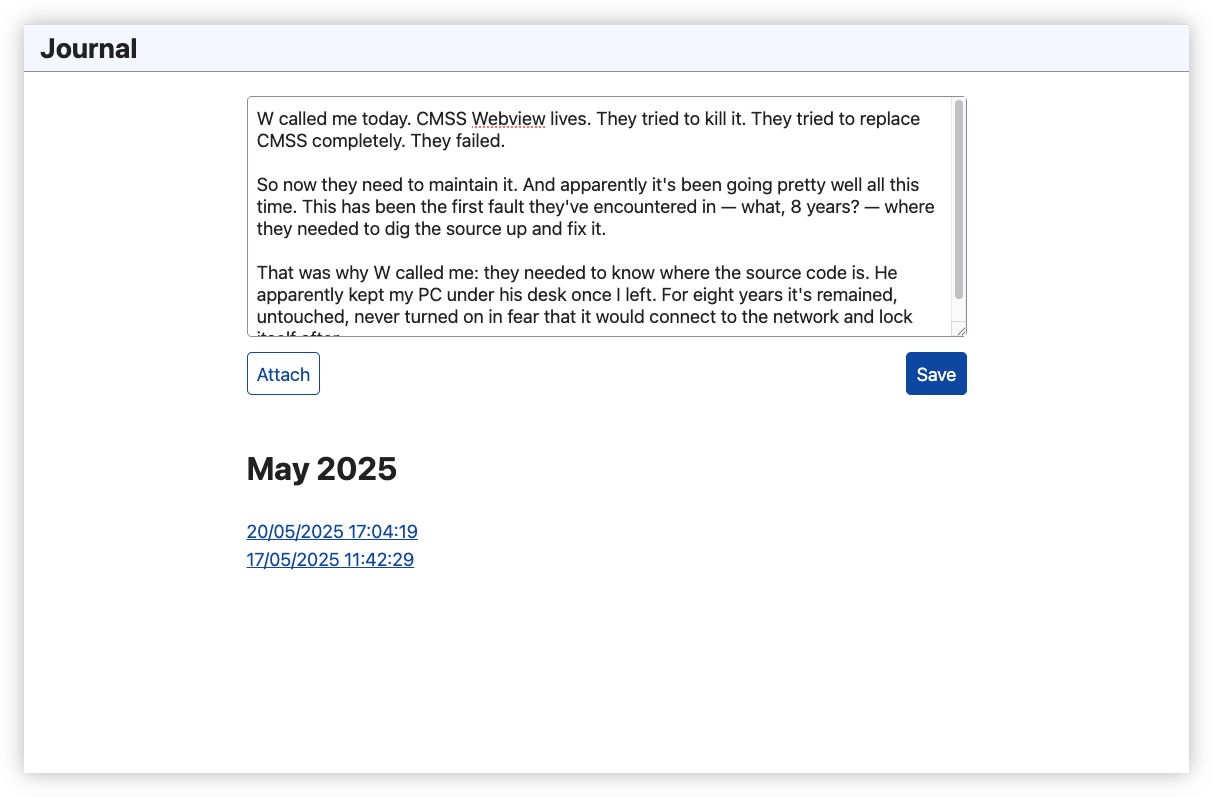
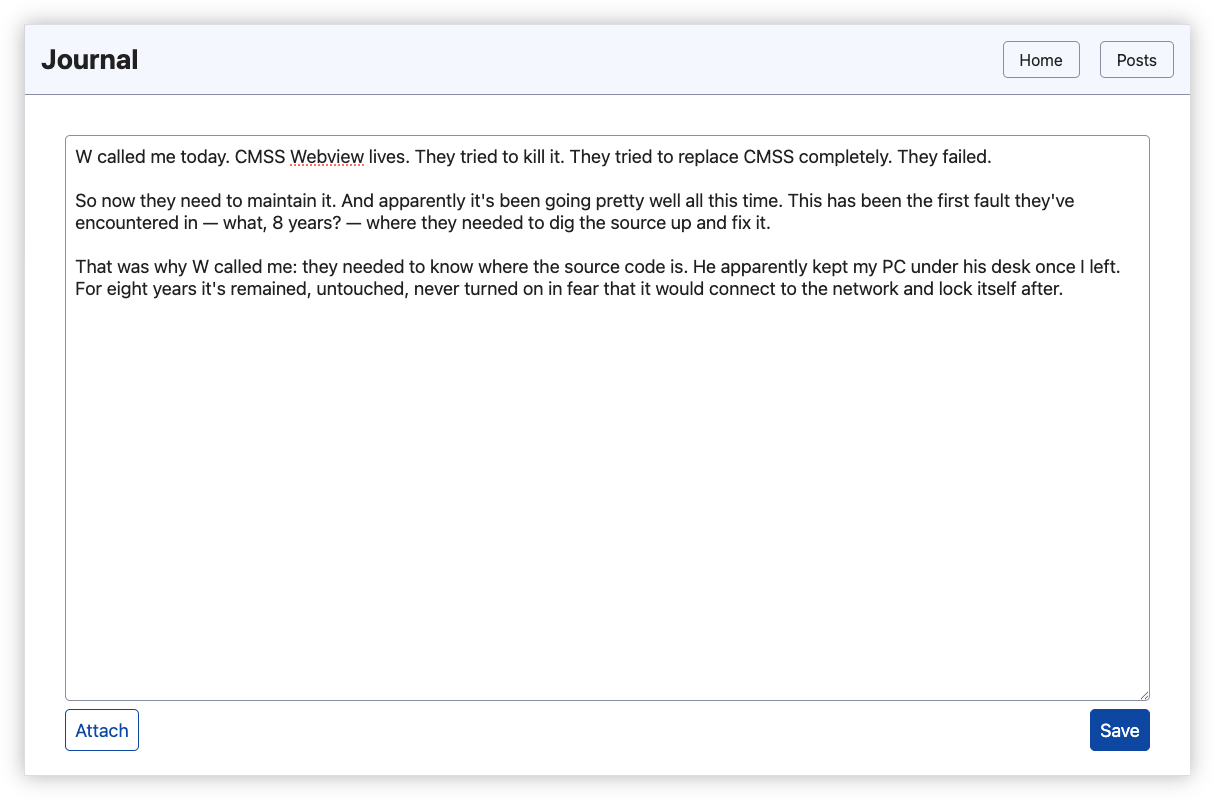
Had a reason to write a journal entry today, which meant I had a reason to work on the journaling app. Biggest change was moving the entry list to a separate page and supersizing the text-area to allow for larger entries. Good thing too: today’s was going to need all the space it could get.
-
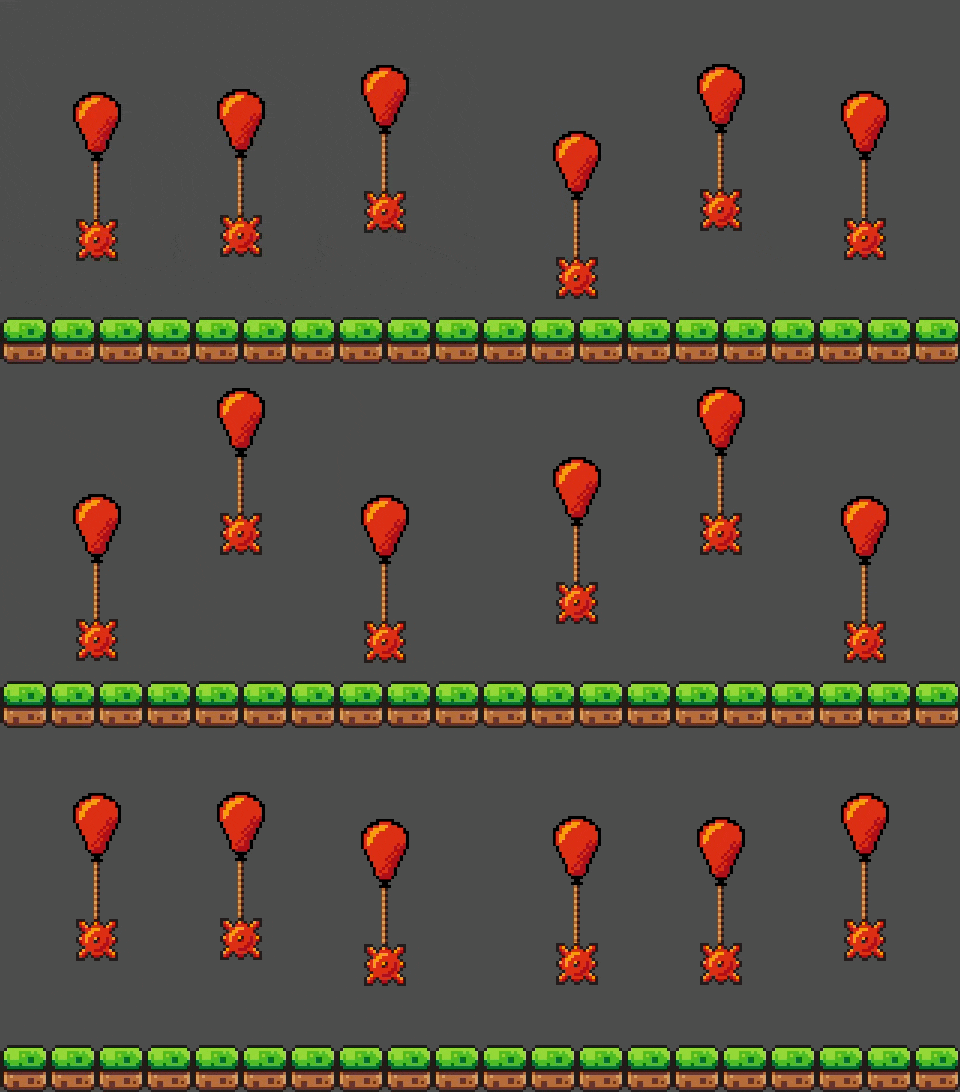
Working on that Godot game again, mainly coming up with mechanics for a new level 2. This is what I’ve got so far: a mine tethered to a balloon. Their idle state is just bobbing up and down, but I am planning a variant which will drop their payload and fly away when the player is nearby.